
Why do some posts go viral while others flop? It comes down to psychology. Learn the triggers that drive engagement, shares, and loyalty.
Social media marketing is often misunderstood as a technical challenge. Brands obsess over hashtags, posting times, and algorithm updates. While those factors matter, they are secondary to the core truth: Social media is about people. It is about human behavior, emotion, and connection.
To truly succeed in the noisy digital space of 2026, you need to stop thinking like a marketer and start thinking like a psychologist. Every like, share, and comment is a result of a psychological trigger. Understanding these triggers allows you to craft content that doesn't just get seen, but felt.
1. The Dopamine Loop and Variable Rewards
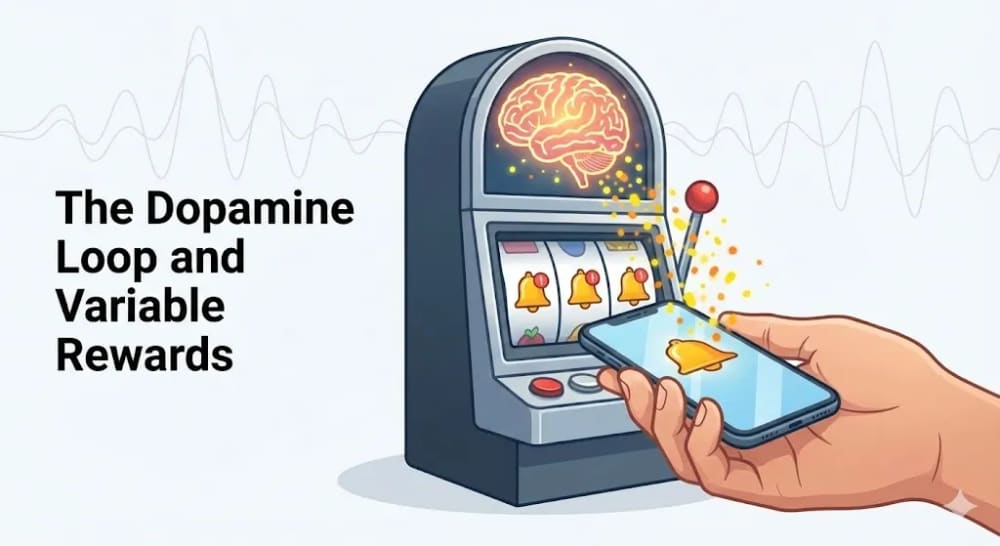
Social media platforms are engineered to be addictive, utilizing the same "variable reward" systems found in slot machines. When a user pulls down to refresh their feed, they don't know what they are going to get—a funny video, a shocking news story, or a message from a friend. That anticipation releases dopamine.
As a brand, you want to be a source of that dopamine. Content that makes people laugh, feel inspired, or learn something new triggers a positive chemical response. If your content is consistently boring or overly salesy, the brain labels it as "noise" and filters it out. You must provide value—entertainment or education—in every single post to keep your audience addicted to your presence.
2. The Fear of Missing Out (FOMO)
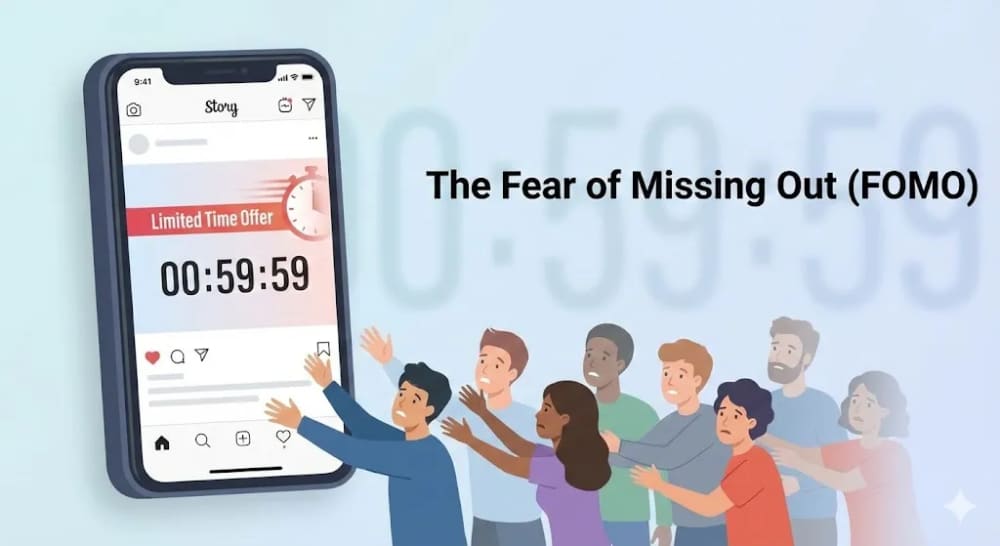
FOMO is a powerful motivator rooted in our evolutionary need to belong to a group. Scarcity and urgency trigger this response. When you post a "Limited Time Offer" or show a "Behind the Scenes" look at an exclusive event, you create a gap between what the user has and what they could have.
Stories (on Instagram and TikTok) are the perfect vehicle for FOMO because they disappear after 24 hours. Using countdown stickers, "flash sale" announcements, or exclusive drops creates an urgency that bypasses logical decision-making and prompts immediate action.
3. Social Proof and Validation
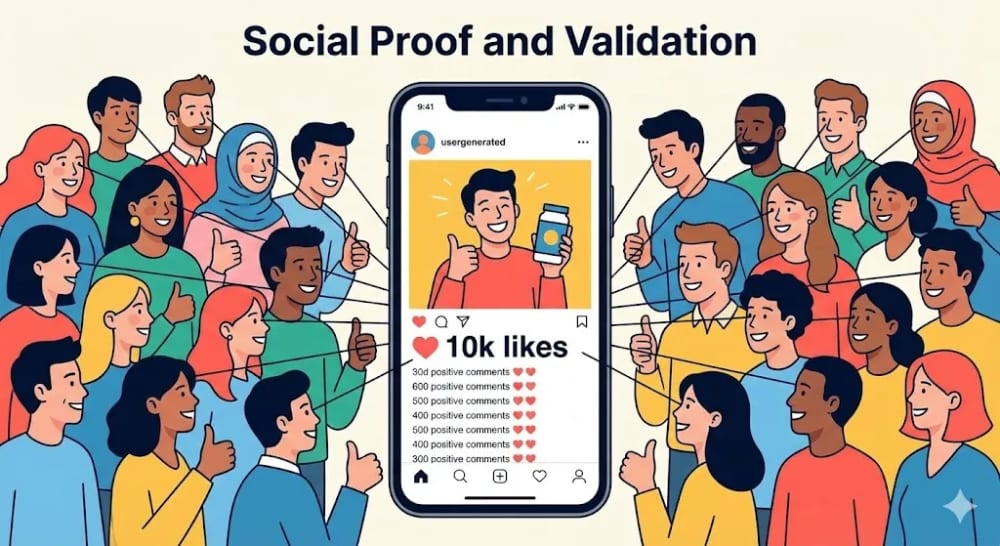
Humans are herd animals. We look to others to determine correct behavior, especially in uncertain situations. This is the principle of Social Proof. If a post has 0 likes, we are hesitant to engage. If it has 10,000 likes, we assume it must be valuable and are far more likely to join in.
This is why User-Generated Content (UGC) is so critical. A photo of your product taken by a real customer is infinitely more trustworthy than a studio shot taken by you. It proves that "people like me" are using and enjoying this product. actively sharing testimonials, reviews, and customer photos signals to the herd that your brand is safe and desirable. (Learn how to collect reviews with our e-commerce packages).
4. The Identity and Ego
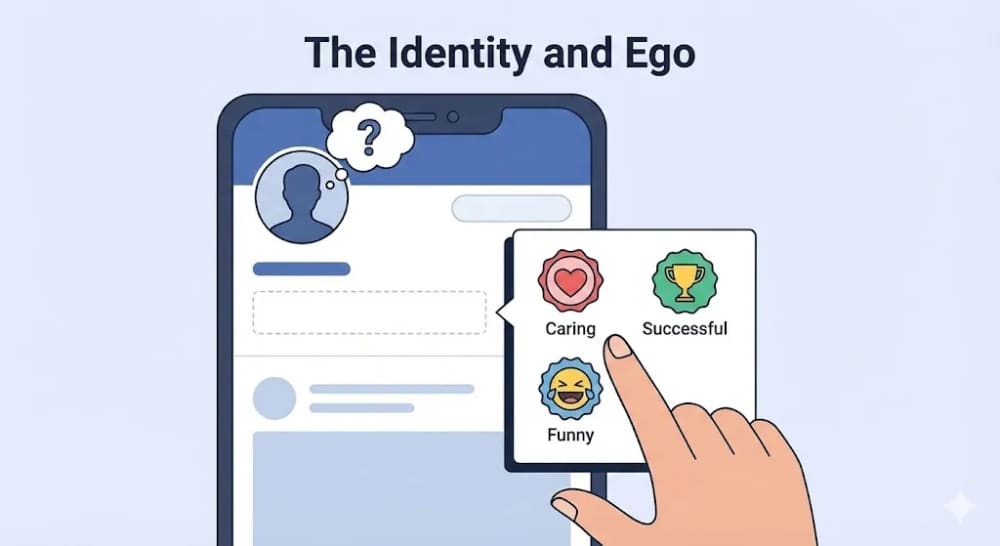
People share content not just because they like it, but because of what it says about *them*. Sharing is an act of identity projection. If someone shares a charity post, they are signaling "I am a caring person." If they share a luxury car, they signal "I am successful." If they share a meme, they signal "I have a good sense of humor."
To create viral content, ask yourself: "What does sharing this say about my audience?" Create content that makes your followers look smart, funny, cool, or virtuous. Give them a badge of identity that they are proud to display on their profile.
"Content is fire. Social media is gasoline. - Jay Baer"
5. Reciprocity
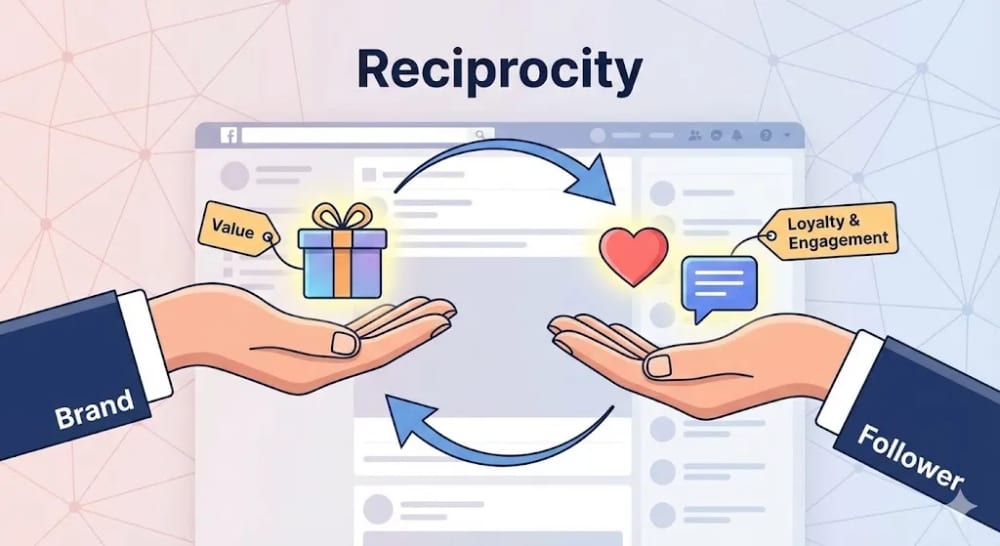
The principle of reciprocity states that if you do something for me, I feel compelled to do something for you. In social media terms, this means you cannot just take; you must give. Brands that only broadcast ads fail.
Brands that reply to comments, answer DMs, and engage with their followers' content create a debt of reciprocity. When you take the time to acknowledge a follower, they feel seen and valued. They are then far more likely to support you, buy from you, and defend you. Community management is not an administrative task; it is a relationship-building strategy. Our social media packages include dedicated community management from the Basic plan upward.
At Designing Dose, our social media strategies are built on these psychological pillars. We do not post and hope. We engineer engagement based on what actually makes people stop, click, share, and buy. Our social media packages start from €399 per month and include content creation, scheduling, community management, and paid campaigns. Book a free strategy session and we will audit your current social presence for free.